Builder
Tippin Guitars
US · MA · by Bill Tippin
Came to lutherie from boat building; his first guitar in 1980, Marblehead ever since
Try one in person at 5 dealers · see them on the map →
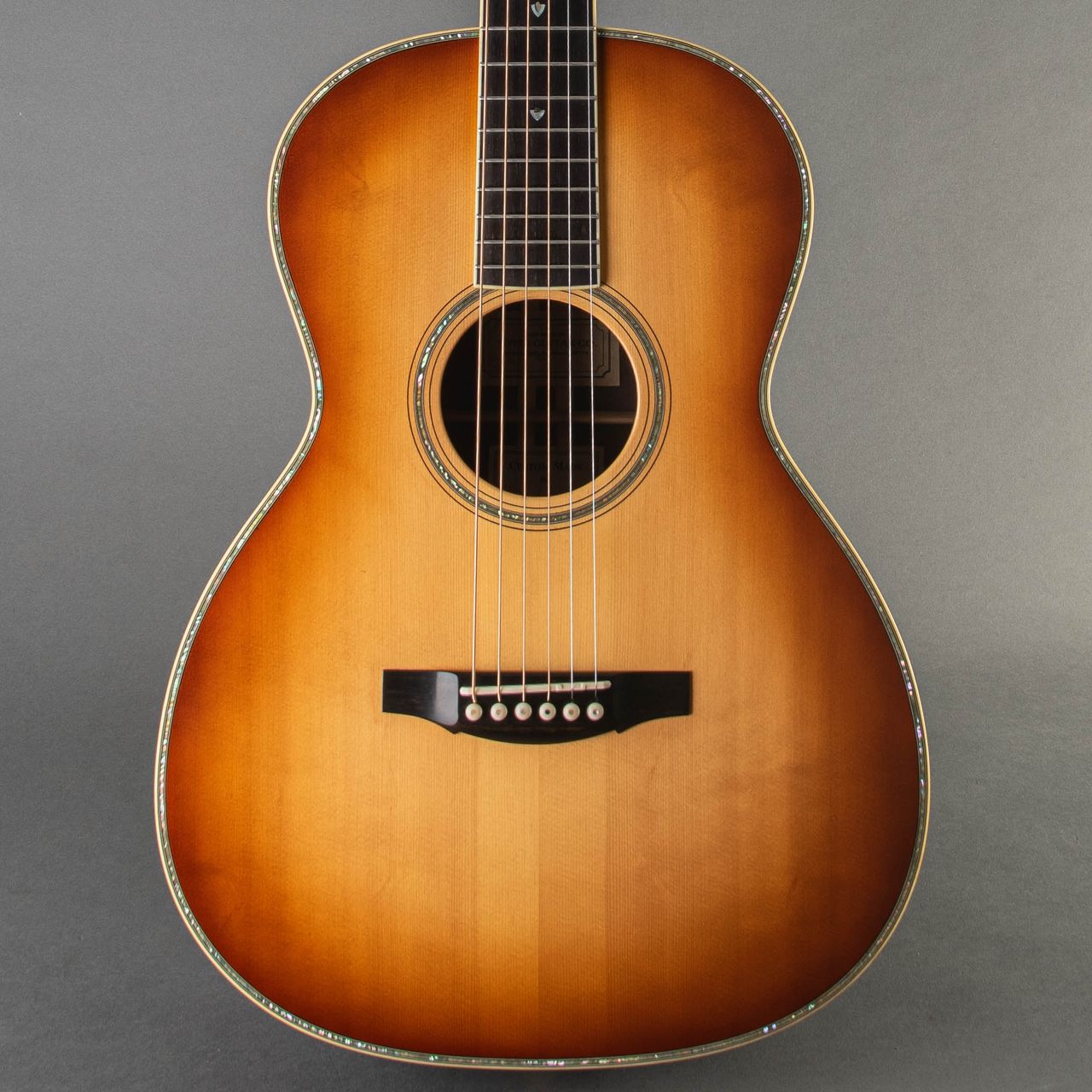
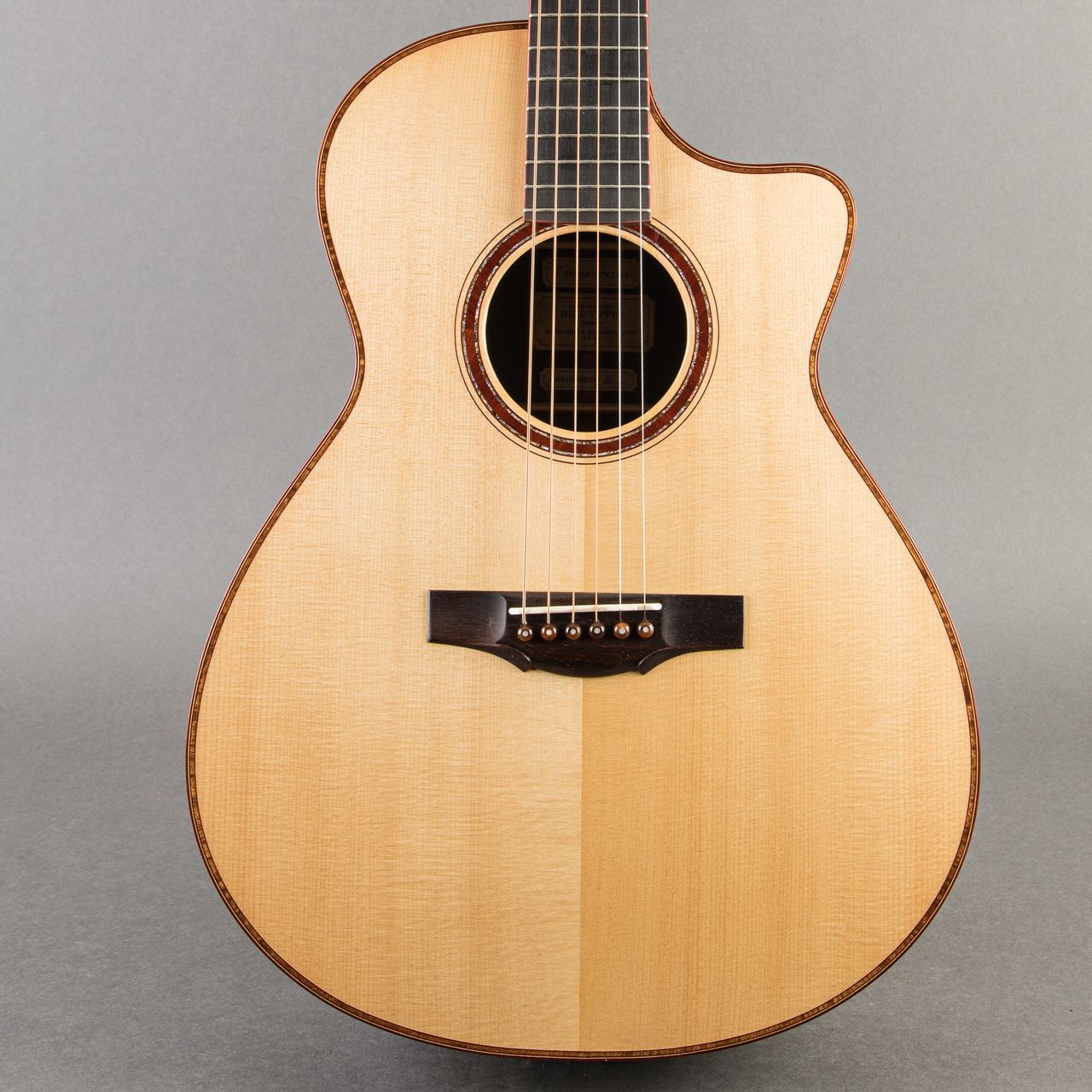
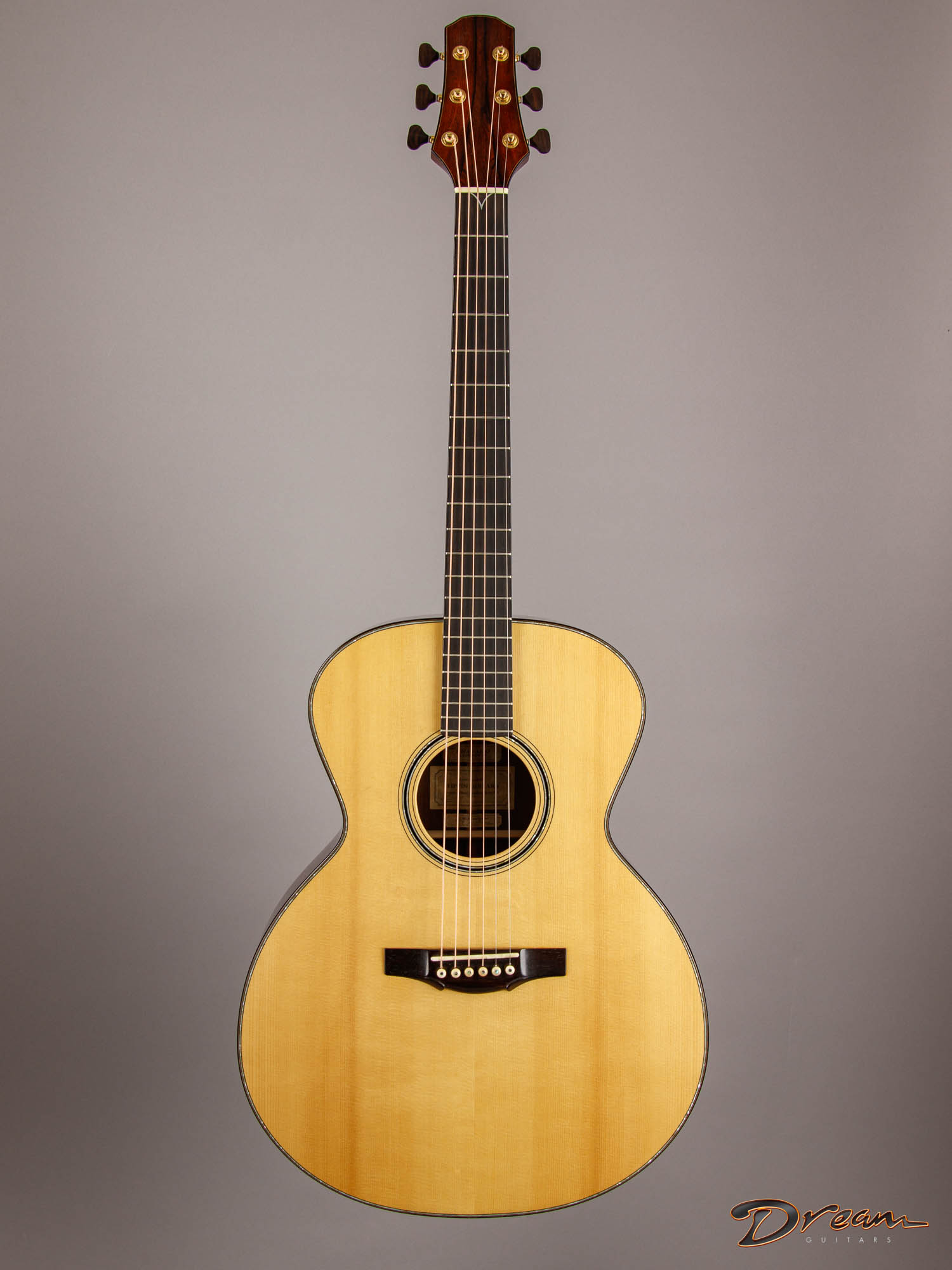
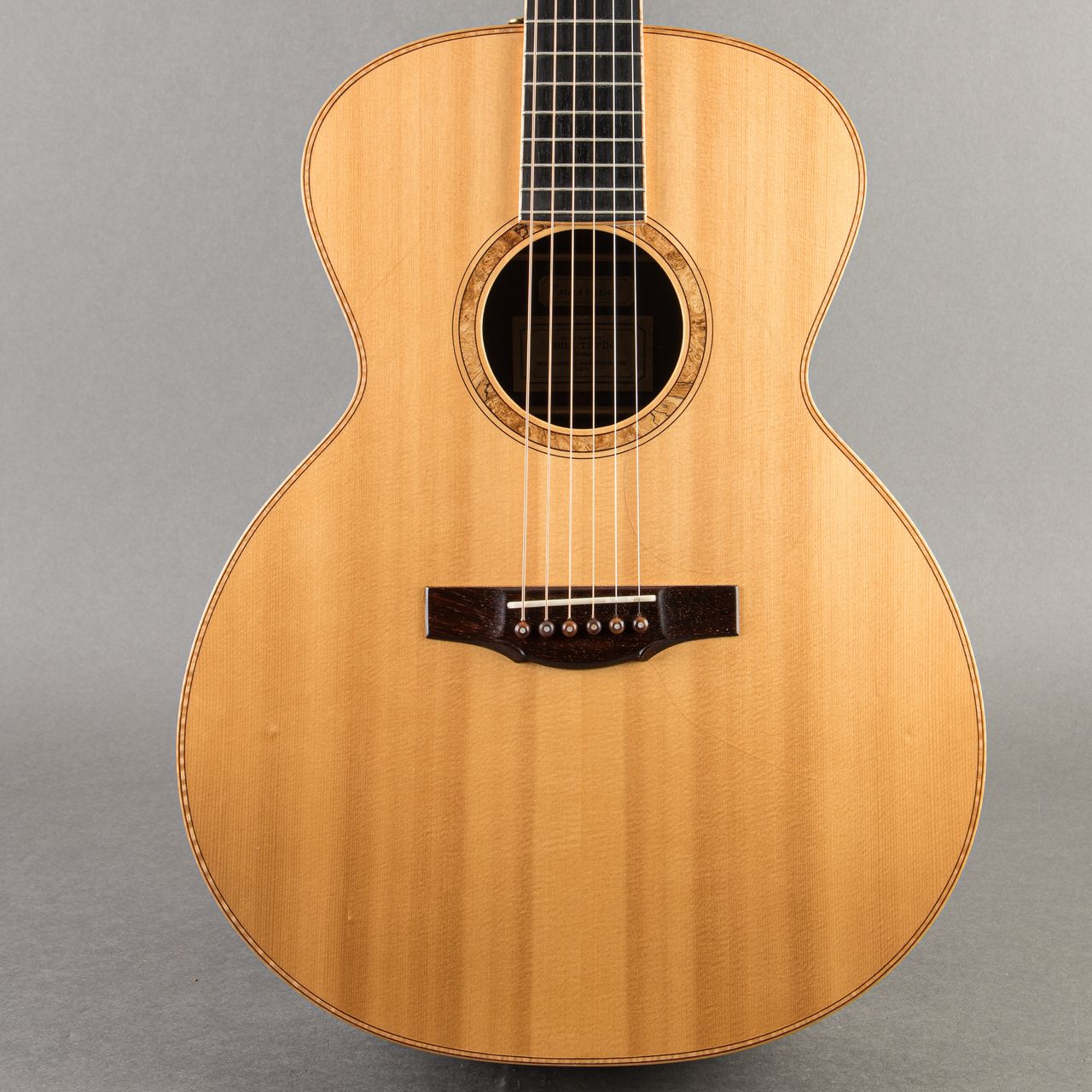
Bill Tippin started building guitars in Marblehead, Massachusetts after a working life in furniture and boat building — two crafts that share with lutherie an obsession with wood selection, grain orientation, and the kind of fit-and-finish work that hides as much as it shows. The shop has been at it for roughly three decades, refining a small, disciplined line of six models: the Bravado (shallow-body jumbo) and Bravado 12, the Baritone (a 27.5" scale tuned to C), the Crescendo (the flagship, slightly larger than a 000/12-fret body), the OMT (traditional 14-fret OM), the Staccato (small-body parlor-shape with surprising volume), and the more recent Forte (a Crescendo with a slightly wider lower bout — originally a personal build that became a production model on customer request). The Tippin tonal signature recurs across all of them: rich bass, snappy midrange, definitive treble, with headroom that holds up under both flatpicking and fingerstyle. Like most builders at this level, Tippin has a roster of well-known players — Grammy-winning fingerstylist Al Petteway carries a signature-series Crescendo, and players including El McMeen and Peter Janson have built parts of their concert and recording sound around the instruments. The genuinely distinctive thing about the shop, though, is that Bill Tippin actively takes restoration and repair work on outside instruments, including pre-war Martins and modern boutique builds from other shops — which is unusual for a custom builder operating at this tier. Robin Weber at Guitar Gallery routinely recommends Tippin for restoration jobs on high-end inventory, and the broader US boutique community treats him as the kind of luthier you call when a guitar arrives damaged or needs major work. That dual reputation — both as a builder of his own instruments and as a trusted hand for others' — is the part worth flagging. Output is small enough that Tippin guitars don't sit long on retail shelves; listings move quickly through the dealers who carry them (Guitar Gallery and Dream Guitars among the most active), and the secondary market sees only occasional appearances. For buyers who find one in our index, that scarcity is the actual market structure rather than a coverage gap. Custom commissions go through Bill directly, and he's well-documented in the boutique-acoustic community as approachable and responsive — the kind of luthier who picks up the phone and walks customers through wood-pair and bracing questions before placing an order. The combination of small output, deep player network, and the unusual repair-and-restoration practice has kept Tippin a steady presence in the boutique-acoustic conversation for thirty years without the brand ever needing to scale up.
Right now on the Atlas
as of Aug 3
$5,695–$27,560 — one that caught our eye: This German Spruce and Brazilian Rosewood Triple-O sits ready for the player who seeks a larger traditional body in an exotic hardwood pairing.