Builder
Preston Thompson Guitars
US · OR · Founded 1980 · by Preston Thompson
Charles Fox's GRD school, then Randy Wood's Old Time Pickin' Parlor
Try one in person at 5 dealers · see them on the map →
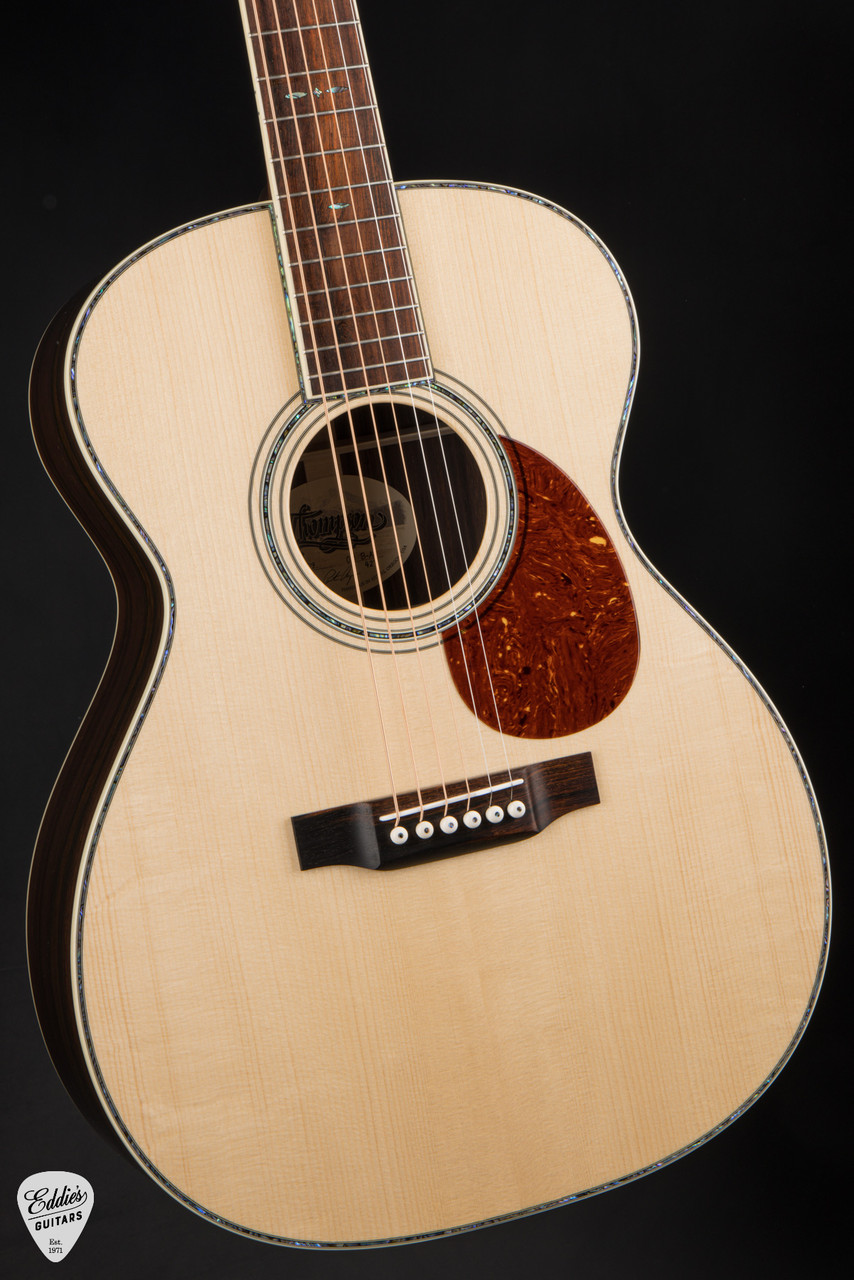
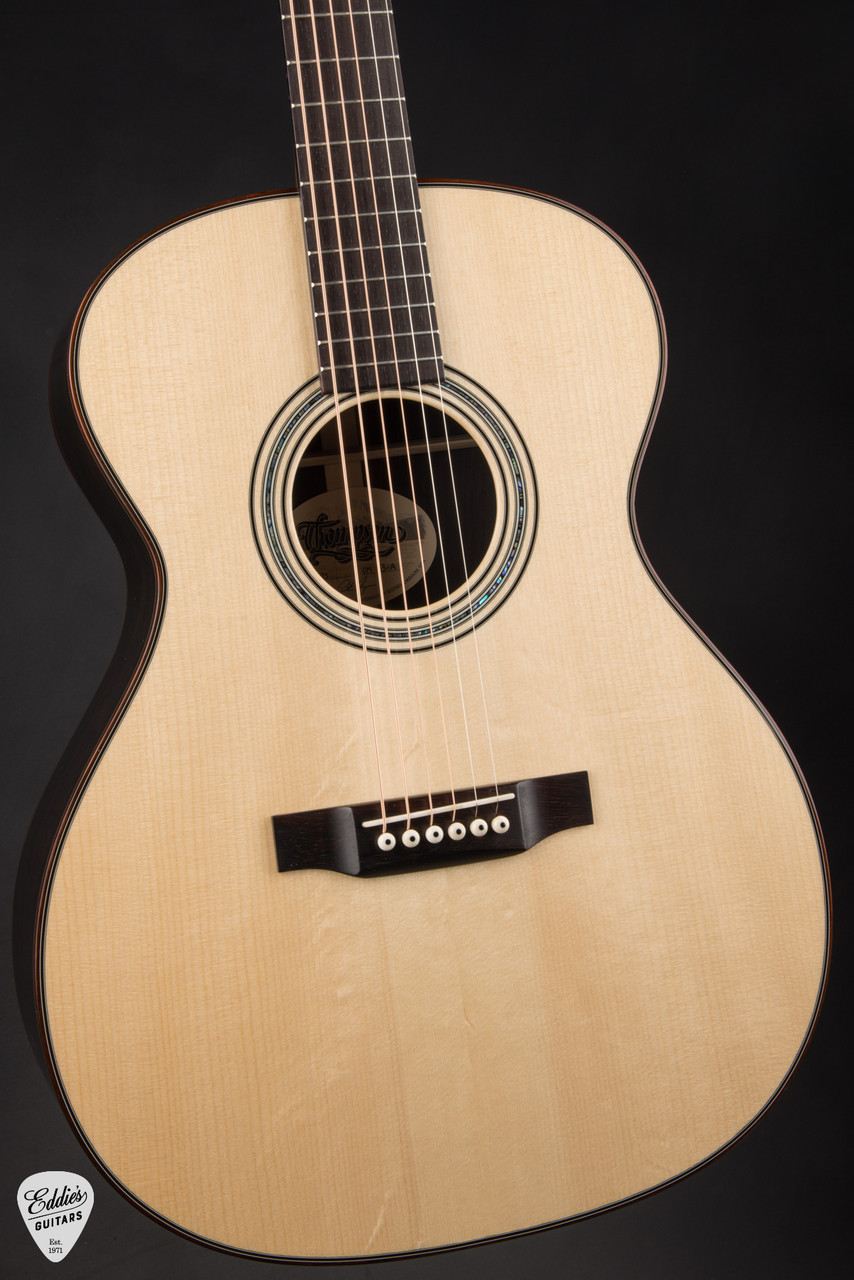
Preston Thompson came up through American luthiery the long way. He started at the School of the Guitar Research & Design Center in Vermont under Charles Fox — the first guitar-making school in North America — then spent the 1970s at Randy Wood's Old Time Pickin' Parlor in Nashville, the gravitational center of the city's bluegrass jam scene. By the early 1980s he was building custom acoustics under his own name, and the top flatpicking and fingerstyle players were paying attention. For three years in a row, his instruments were selected as the winner's prize at the National Flatpicking Championships at Winfield, Kansas — the genre's most credible endorsement. The defining collaboration of Preston's career was with Charles Sawtelle of Hot Rize. Sawtelle owned an unusually deep collection of pre-war Martin dreadnoughts and gave Preston access to measure and study them in detail. The guitar Preston built for Sawtelle from those studies became one of Sawtelle's most treasured instruments — the only non-vintage guitar in his playing rotation. The measurements from that period — bracing geometry, top graduations, neck profiles, hardware spacing — became the spine of the Thompson voice, and the shop still works from them today. The shorthand the trade press settled on was "pre-war tone, modern build," and players from Eric Bibb forward have agreed. Preston passed away in April 2019 after several months of illness. He had been deliberate about passing his methods to the small team around him — the same craftsmen who had been doing the bench work alongside him for years — and the shop continued building in Sisters without breaking its rhythm. The dovetail neck joints, the hand-graduated tops, the Forward-Shifted-X bracing, and the nitrocellulose finishes are what Preston established and what the team continues to use. The guitars are still built one at a time, voiced by ear, and the standards have not moved. The materials reflect the same patience the build process does. Adirondack red spruce is the standard top, with Sitka, European, Lutz, Western Red Cedar, and Port Orford cedar offered as alternatives — including thermally-aged options and the occasional unusual find (a recent batch came from a Sitka log that had been submerged for decades as part of an Alaskan barge). The back-and-sides roster includes Thompson's celebrated Shipwreck Brazilian Rosewood — salvaged from 1930s supply ships that sank off the Brazilian coast en route to Northern European furniture mills — alongside 5-A Brazilian from reclaimed beams, East Indian Rosewood, Honduran Mahogany, Koa, Oregon Myrtlewood, and flamed Walnut. Cuban Mahogany, Sinker Mahogany, Quilted Mahogany, and flamed and quilted Maple are in the works for limited editions. Every set comes through a builder who looks at it the way Preston would have.
Right now on the Atlas
as of Aug 3
Only 1 listing is a twelve-fret build — one that caught our eye: A twelve-fret mahogany Double-O sits in inventory, offering the classic proportions of Thompson's smaller design.