Builder
Hozen Guitars
SG · by Ho Zen Yong
Trained directly under Ervin Somogyi — The Somogyi school
Try one in person at 5 dealers · see them on the map →
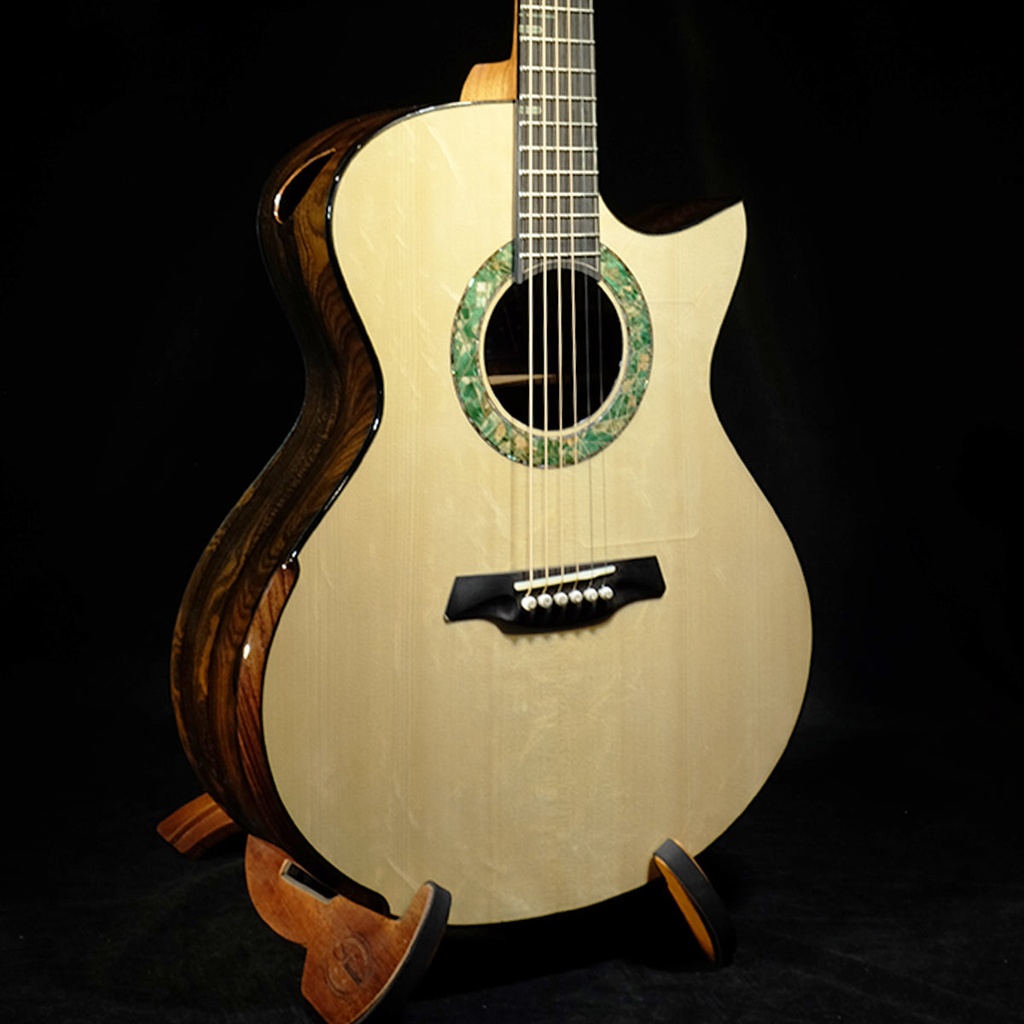
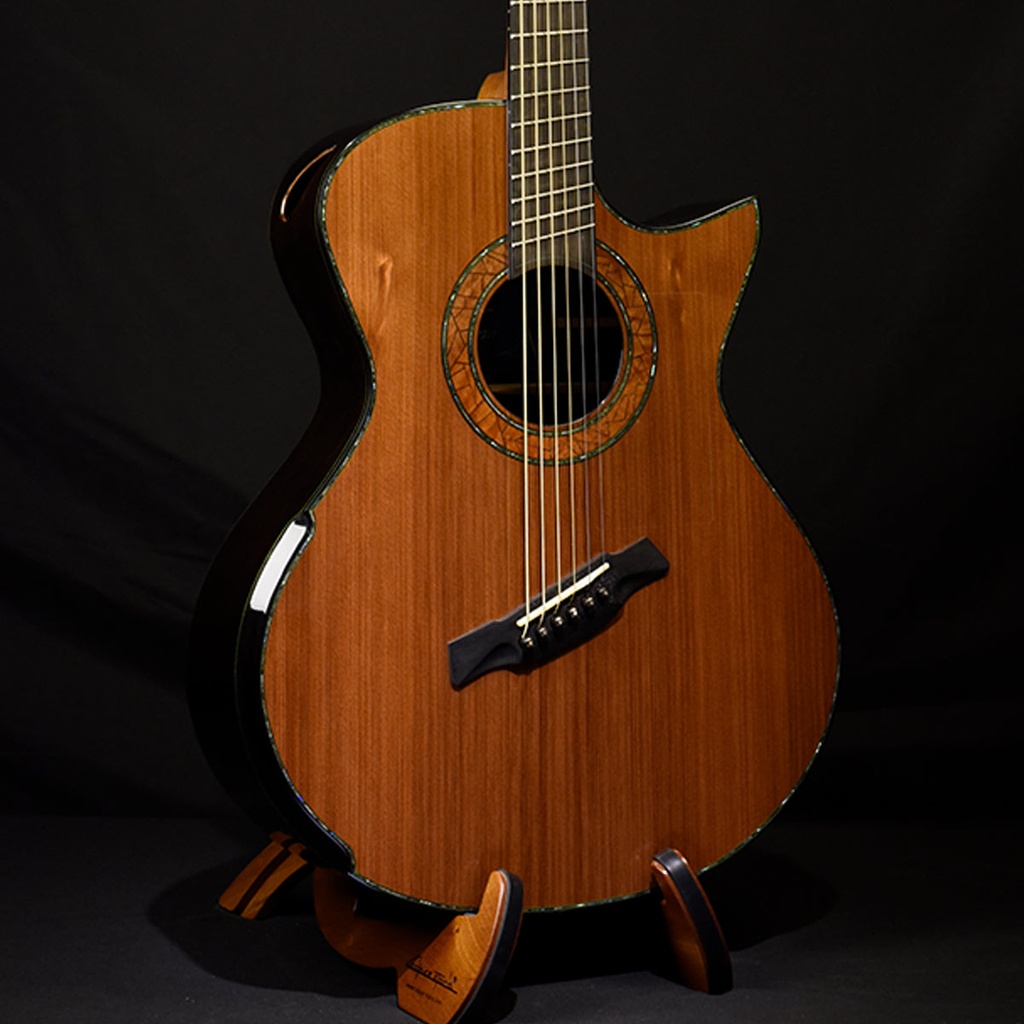
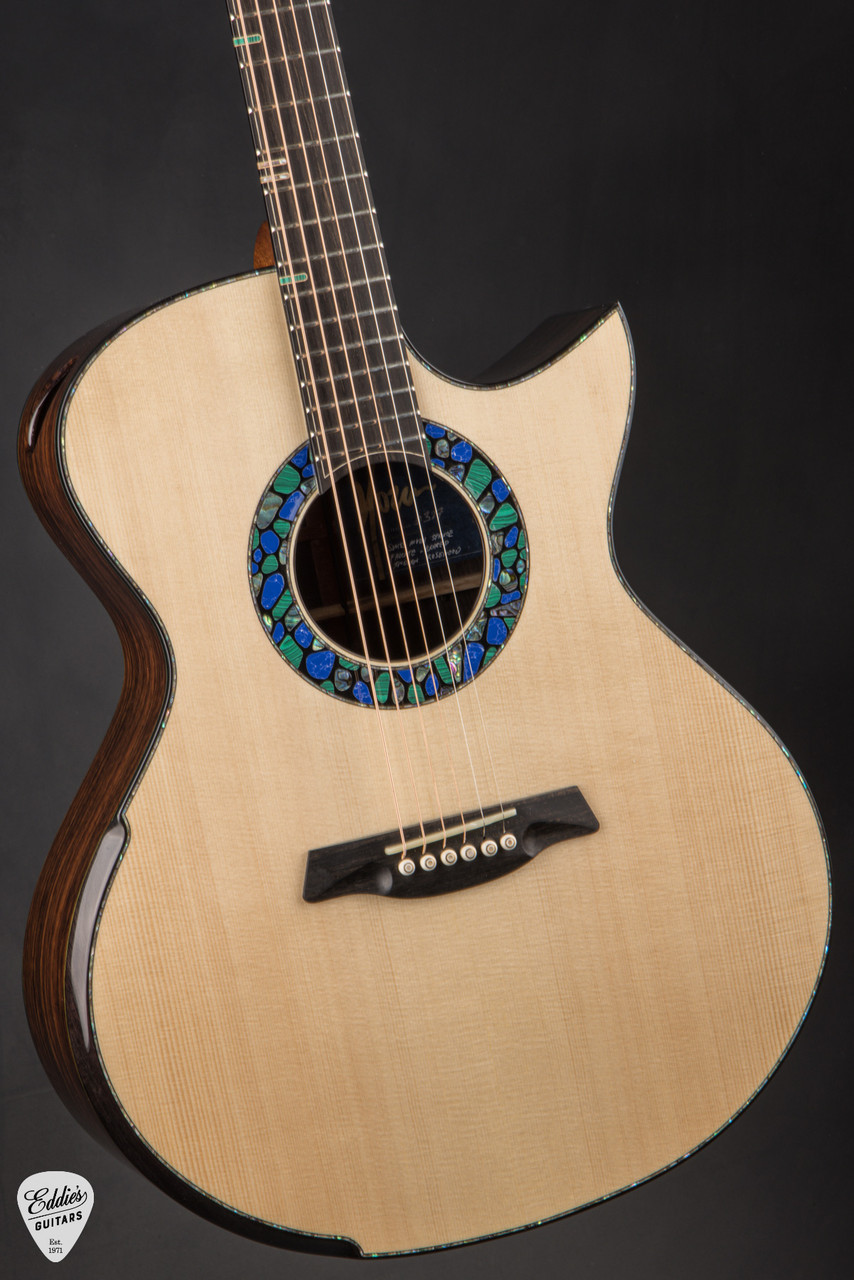
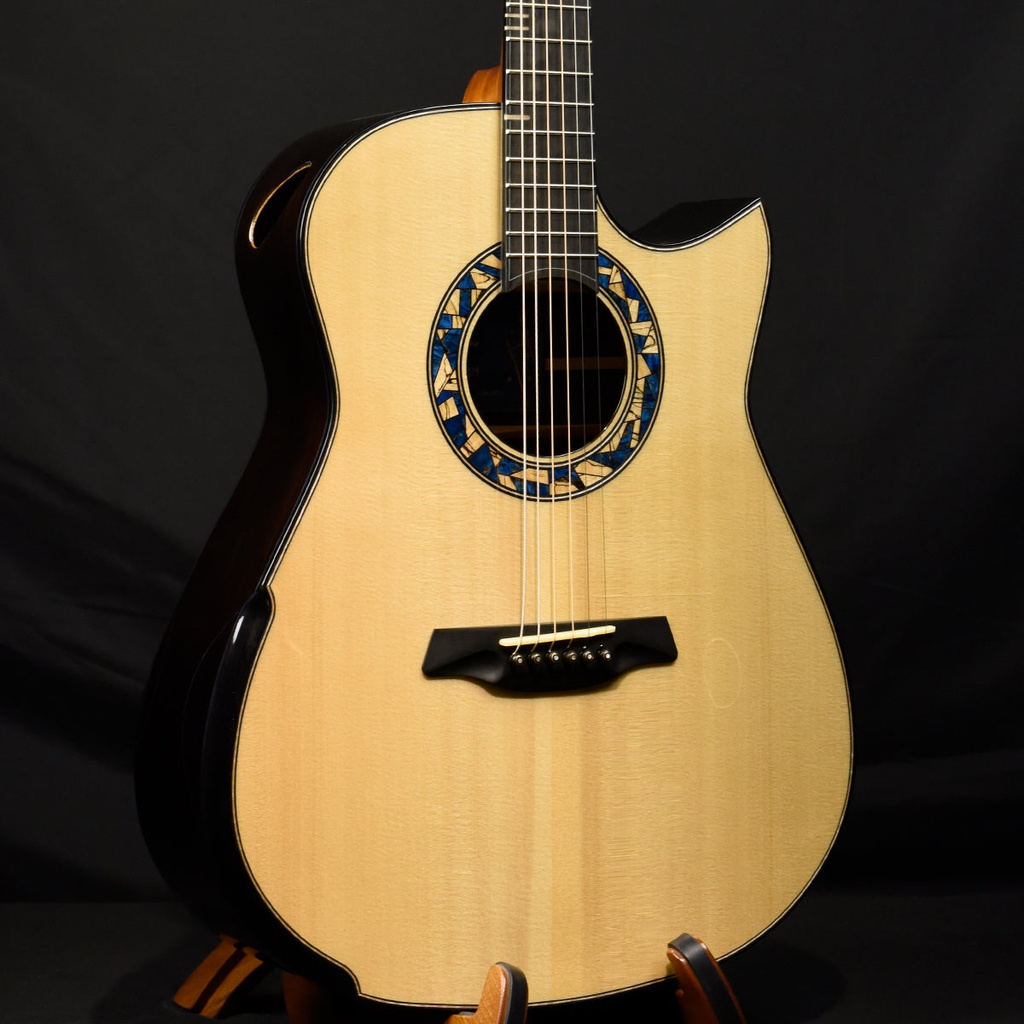
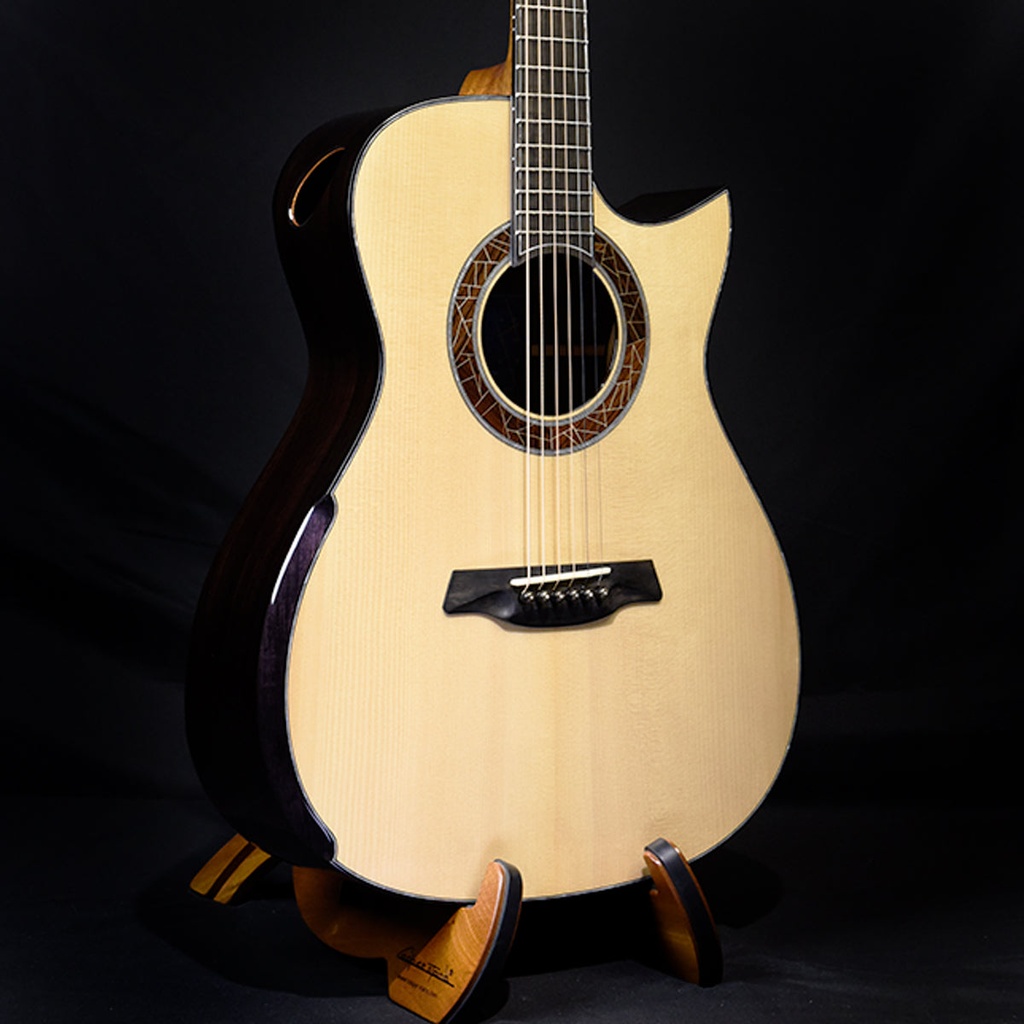
Ho Zen Yong — Hozen — came to lutherie largely self-taught, with early guidance from the British luthier Chris Horton and later study under Ervin Somogyi. His own account of learning to control a soundboard is that there is no formula for it, only the experience of building enough of them to find out. That apprenticeship happened in public: for some fifteen years he built under the Maestro Guitars name, founded in Singapore in 2004 to put serious instruments below boutique prices. It worked, but the question changed — less how many good guitars a team could make, more how far one could go if he stayed close to it. He stopped building Maestros in 2022 and put his own name on the headstock. Two weeks in Oakland in 2015 reframed the work: a guitar as a living system rather than a set of parts, and tap tuning as only the surface of voicing. He returned to Somogyi for annual reviews until 2021, when he was told he was ready. What separates him from most who pass through that school is that he did not settle there — he sets Somogyi's lattice thinking alongside the falcate bracing of the Australian luthier Trevor Gore, one reaching for overtone complexity, the other for a firmer fundamental, and chooses between them for the wood and the player in front of him. Dealers on both sides of the Atlantic describe the result in the same terms: warm and rich, deep bass against sparkling treble, more volume than the body predicts, and a soundport that turns all of it back toward the player. Wood is where the work diverges most from the market. He is openly sceptical of "Mastergrade" as a standard — a largely visual metric that guarantees nothing about how a top responds — and of the prestige attached to Brazilian rosewood, his answer being that a poor piece of it is still a poor piece of wood. He sources globally for response instead, naming African padauk, Australian blackwood and Santos rosewood among his alternatives. The shelves bear it out: across the Hozen instruments the Atlas has indexed, ziricote, cocobolo, bocote and granadillo appear where most of the market reaches for Indian rosewood, and no two have shared the same top-and-back pairing. That last part is by design. Red, Black, Green and Gold are closed platforms, and any meaningful change to one — a nut width, a wood, an inlay — promotes the instrument into Blue Label, the one-off tier drawn from a private tonewood stash. Blue is most of what reaches retail. Behind it is an atelier of three or four luthiers in Huadu, Guangzhou, where finish, necks and binding go to specialists so that Hozen can carve every brace and voice every top himself. The output stays small, and the guitars still turn up on shop floors in four countries — which is unusual at this level, and a consequence of how the shop is built rather than of how much it makes.
Right now on the Atlas
as of Sep 21
Only 2 listings feature African Blackwood — one that caught our eye: Sinker Redwood paired with African Blackwood distinguishes this baritone as a notably dark-wood complement to its lighter soundboard choice.