Builder
Fairbanks Guitars
US · VT · by Dale Fairbanks
Vintage-inspired flat-tops in the pre-war idiom — Golden-era Gibson
Try one in person at 9 dealers · see them on the map →
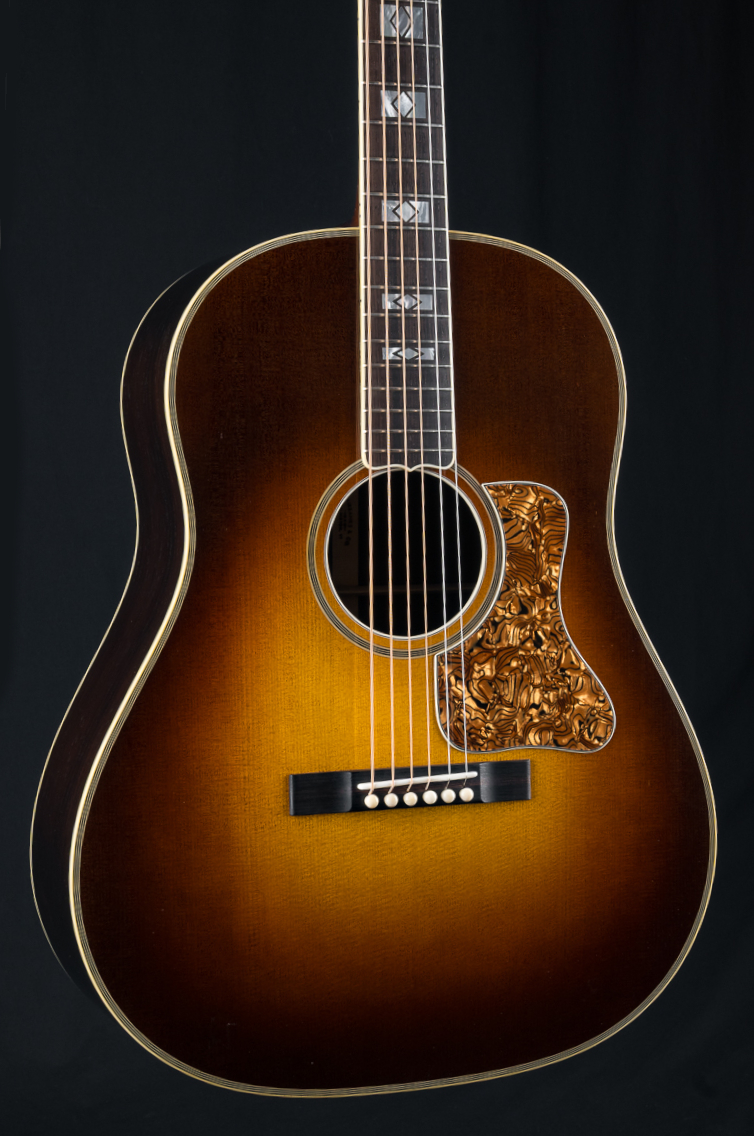
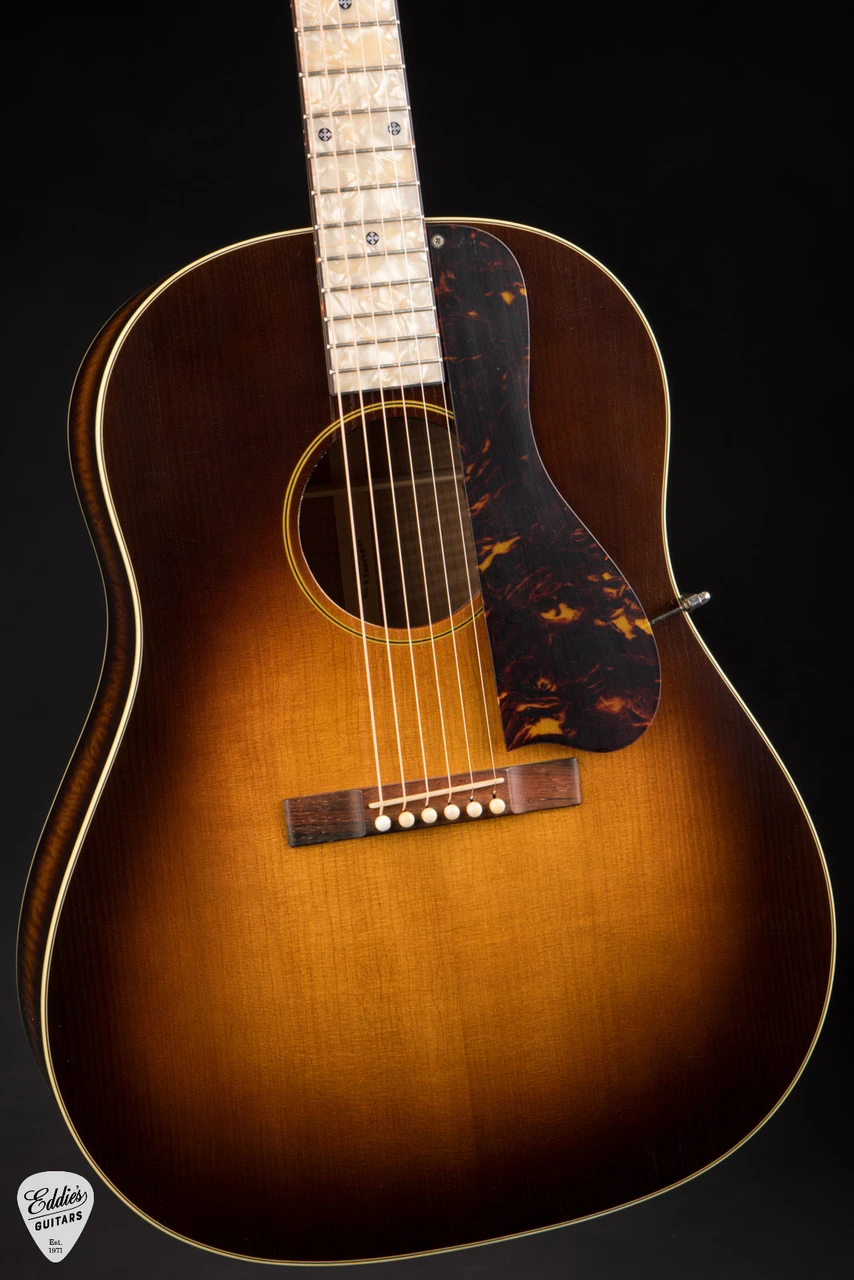
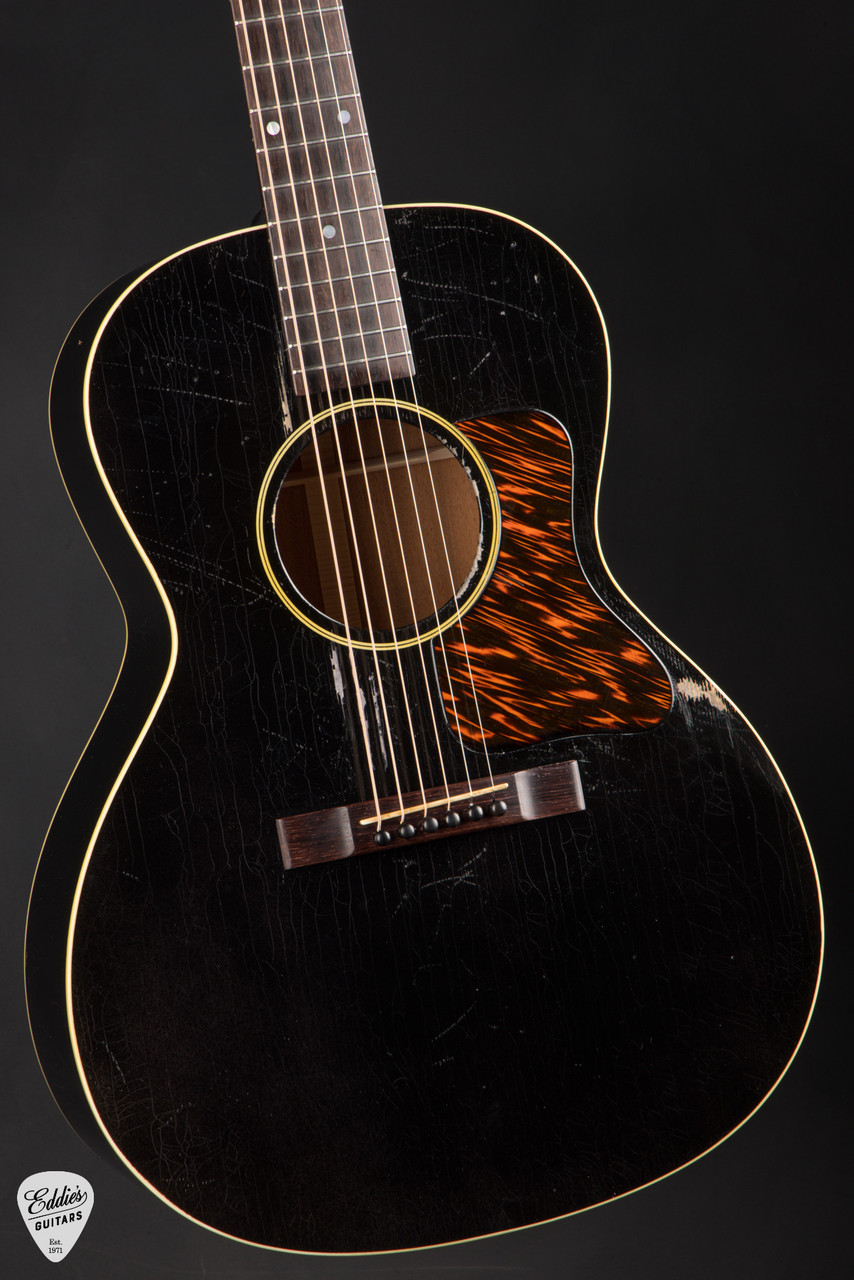
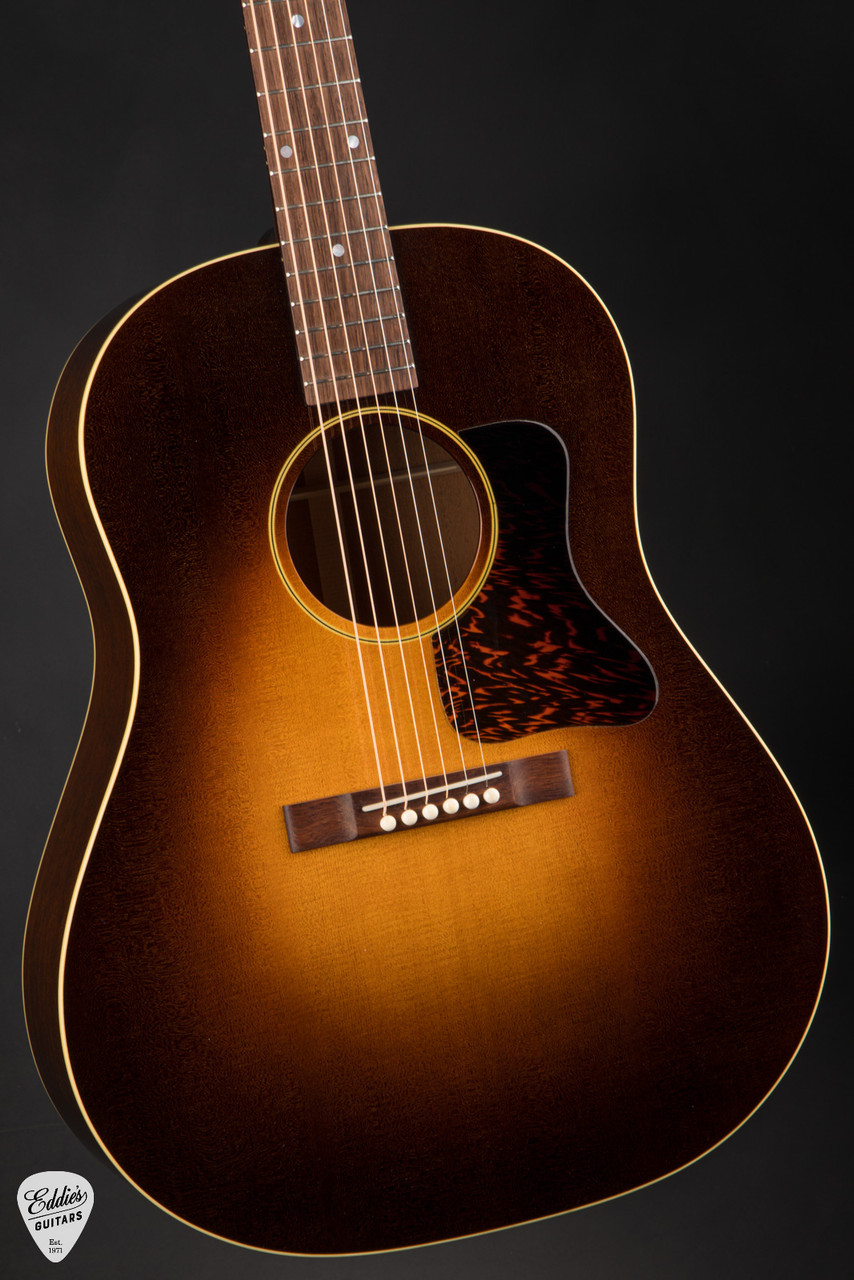
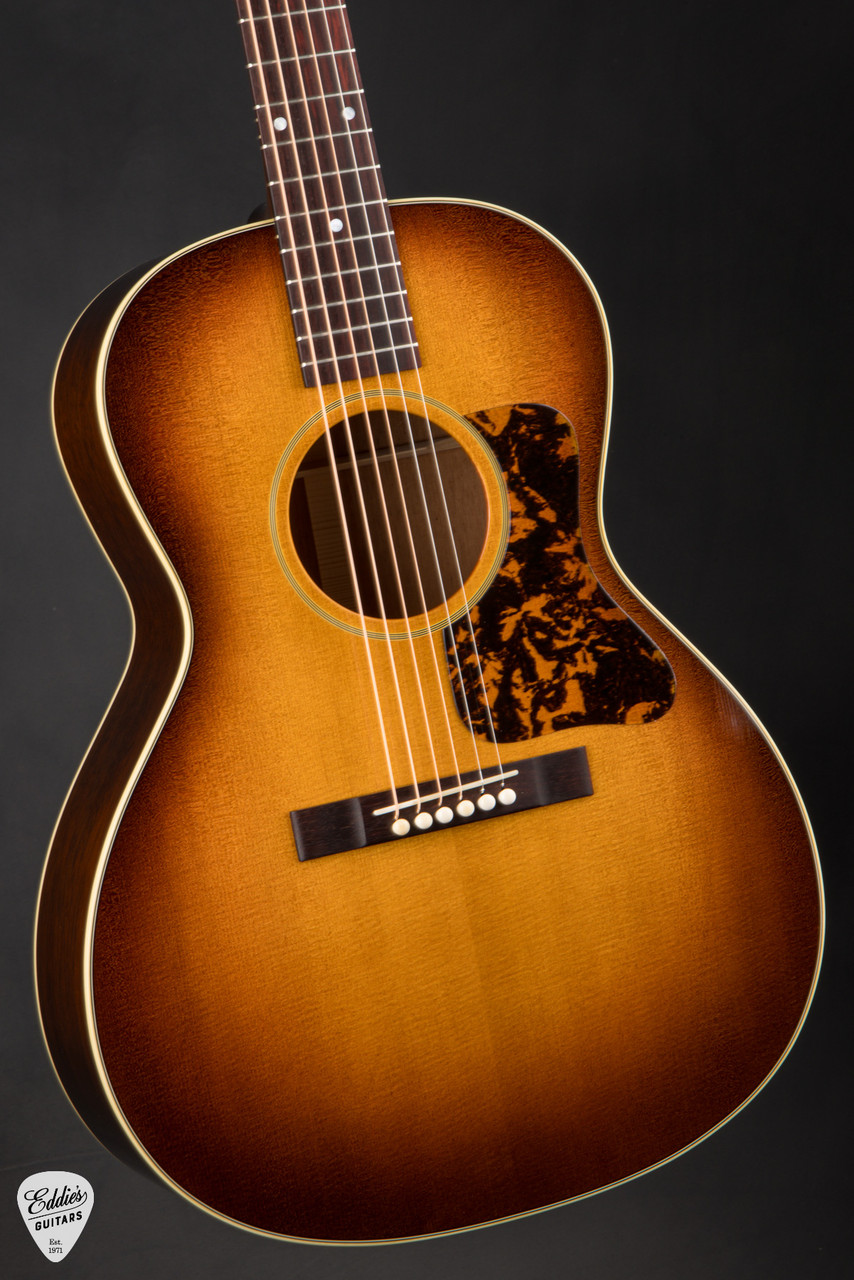
Dale Fairbanks came to lutherie through music. The trumpet carried him from age nine to the Berklee College of Music, and a parallel obsession with early American blues and ragtime drew him toward the small-body flat-tops the genre's legends played. He built his first guitar around the turn of the century — a black-topped mahogany L-00 that has since, in his telling, self-destructed — and spent the years after it on a long trial-and-error pursuit of what gives pre-war guitars their particular, hard-to-name magic. He builds in Burlington, Vermont, where his shop shares space with Adam Buchwald's Circle Strings and Iris Guitars. What he settled on is a clear mission: "the best modern reproductions of the coolest guitars ever built." In practice that means the small-body Gibsons and Stellas of the 1920s, '30s and '40s, reimagined for a modern player. The Fairbanks line maps closely onto those originals — the F-20 to the L-00, the F-10 to the L-1, the F-35 to the J-35, the F-45 to the J-45, plus Nick Lucas, Roy Smeck, and jumbo variants — but these are not slavish copies. Fairbanks substitutes his own modified, unscalloped X-bracing for the ladder bracing of the originals, which trades a little period quirk for more sustain, clarity, and balance, and fits a two-way truss rod into a vintage-profile neck. The materials and appointments lean traditional: red or Adirondack spruce tops, Honduras mahogany backs and sides (maple on the jumbos), Madagascar rosewood fingerboards and bridges, bone nuts and saddles, ivoroid binding, Waverly tuners, and a thin nitrocellulose-over-shellac finish under one of the hand-applied aniline sunbursts he's known for. Reviewers single out the build quality — delicately carved, tall-and-thin back braces, an exceptionally clean X-brace joint, no glue squeeze-out — and a voice that delivers genuine vintage flavor with modern robustness: rich harmonic content, long sustain, surprising bass for the body size, and little midrange boxiness. Because Fairbanks works essentially alone and in low volume, nearly every guitar is built to order, with neck profile, width, woods, inlays, and finish specified to the player. His most current work is the Salvage Series, built only in 2026 and individually numbered. It pairs old-growth mahogany backs and sides with Sitka spruce tops reclaimed from decommissioned Alaskan salmon traps — sinker wood rescued in the early 1990s from the fjords of Tenakee Springs, barn-stored for decades, and prized for being lightweight, remarkably stable, and unusually clear after its long saltwater curing. The supply is genuinely finite: when 2026 closes or the wood runs out, whichever comes first, this version of the series is done. The F-20 Salvage is voiced for fingerstyle and delicate playing; the larger F-60 Salvage adds warmth and a fast, present midrange, its bracing hand-voiced so that, as Fairbanks puts it, no two sound exactly alike.
Right now on the Atlas
as of Sep 21
12 distinct body & wood combinations — one that caught our eye: Twelve-fret Adirondack spruce and Brazilian rosewood guitar offering a compact format with traditional materials.