Builder
Greven Guitars
US · WA · Founded 1969 · by John Greven
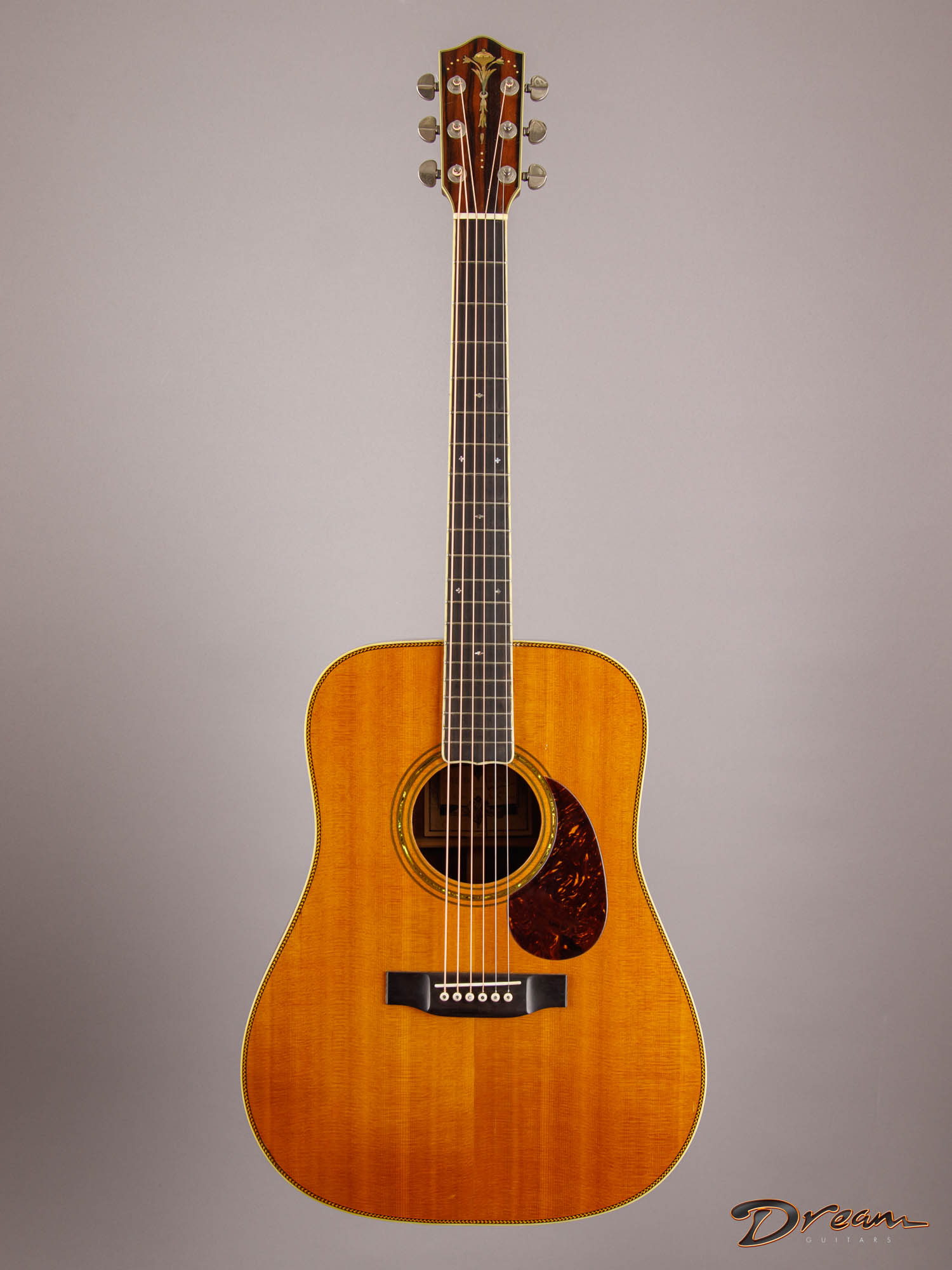
John Greven started building guitars in 1969 and spent the late 1960s and mid-1970s working in George Gruhn's Nashville shop — the legendary vintage-instrument operation that has handled many of the most important pre-war Martins and Gibsons in private hands over the last half-century. That apprenticeship is the load-bearing biographical fact about Greven's work: he learned to repair and restore the instruments that define the pre-war American acoustic voice, and he has spent the fifty-plus years since building guitars that carry that DNA forward. His writing on voicing — including a widely-circulated technical paper that was hosted on his old site — reads as the work of a builder who has thought hard about why pre-war guitars sound the way they do and how to recreate that response in modern construction. Lutz Spruce is a recurring soundboard choice, often paired with Brazilian rosewood, figured maple, or mahogany. For much of his career Greven built up to sixty instruments a year — a working pace that's high for a solo luthier and reflects the production discipline of someone who began in a busy repair shop and never lost the cadence. Total output has now passed instrument #2200. In 2021 he closed his shop near Portland, Oregon and moved north to Lacey, Washington in what was intended as semi-retirement; he restarted building in 2023 and has continued at a slower pace since. The Greven catalog spans the classic pre-war forms — L-00, 00 and 000 12-fret, OOO, Nick Lucas, the Whyte Lady jumbo, and dreadnought — with a particular focus on small-body and short-scale models that suit fingerstyle, old-time, and Delta blues players. The Greven sound is widely described in the boutique community as dry, vintage-thumpy, and understated — players who've A/B'd against actual 1930s Gibson L-00s have flagged Grevens as comparable in feel and response, occasionally preferred. Fit and finish is hand-carved throughout, of a generation where voicing was prioritized over CNC-perfect cosmetics; that's part of the instrument's character, not an oversight. There's no current website, and communication with the shop runs through dealers and direct contact — buyers who want a Greven typically find them through the small handful of dealers who actively stock his work, or by reaching John directly through that community. Output at the current pace is small enough that listings don't sit long when they appear; when one surfaces in our index, it tends to be at a dealer who knows the work and has relationships with the buyer pool that values pre-war voicing authentically over modern boutique-flash.